Gave OVB a clearer starting point for every client.
OVB Allfinanz Slovakia helps clients navigate the complex world of finance. Before an advisor can move forward with a client, they need to collect the right information, record consents and complete the required checks.
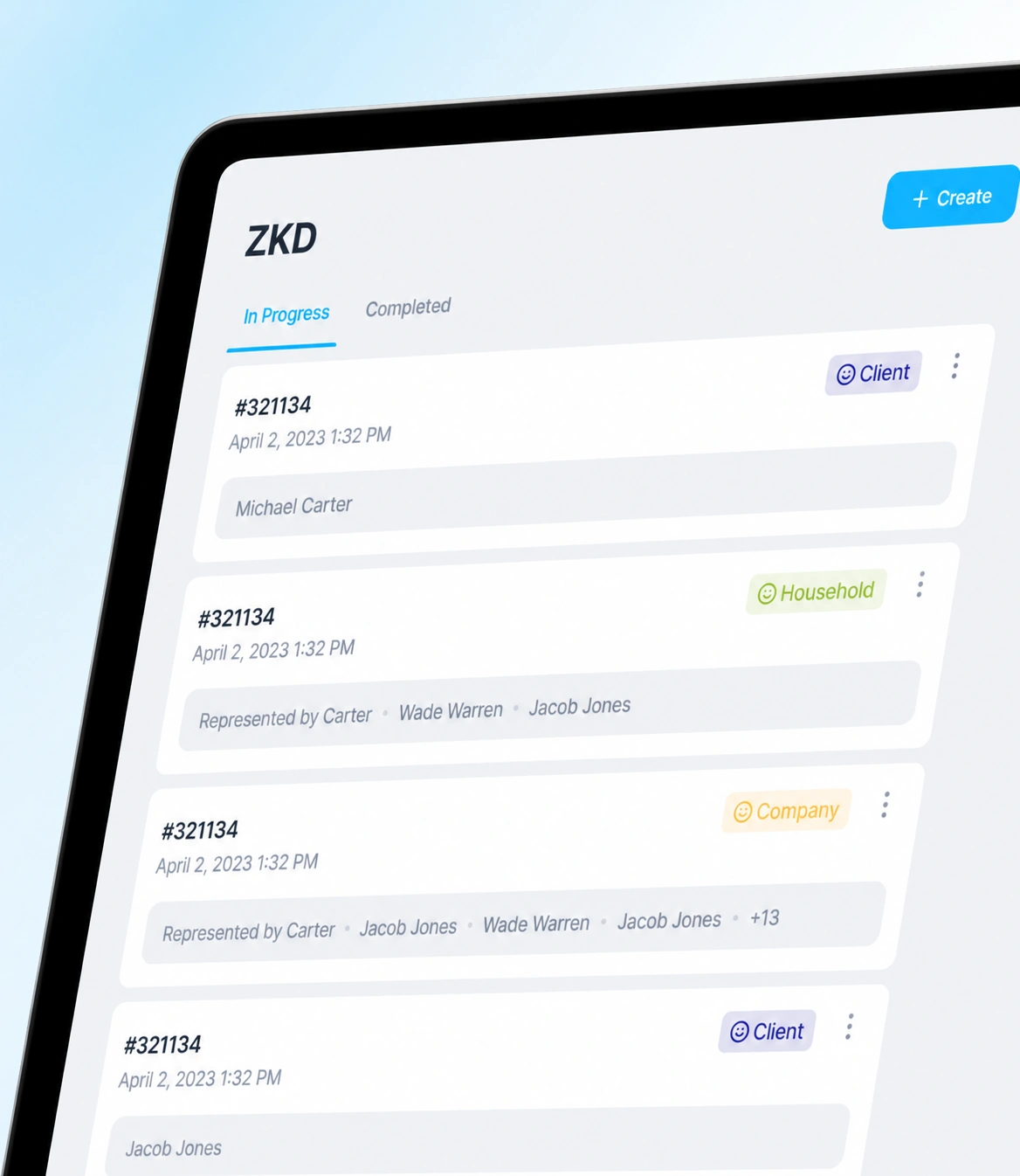
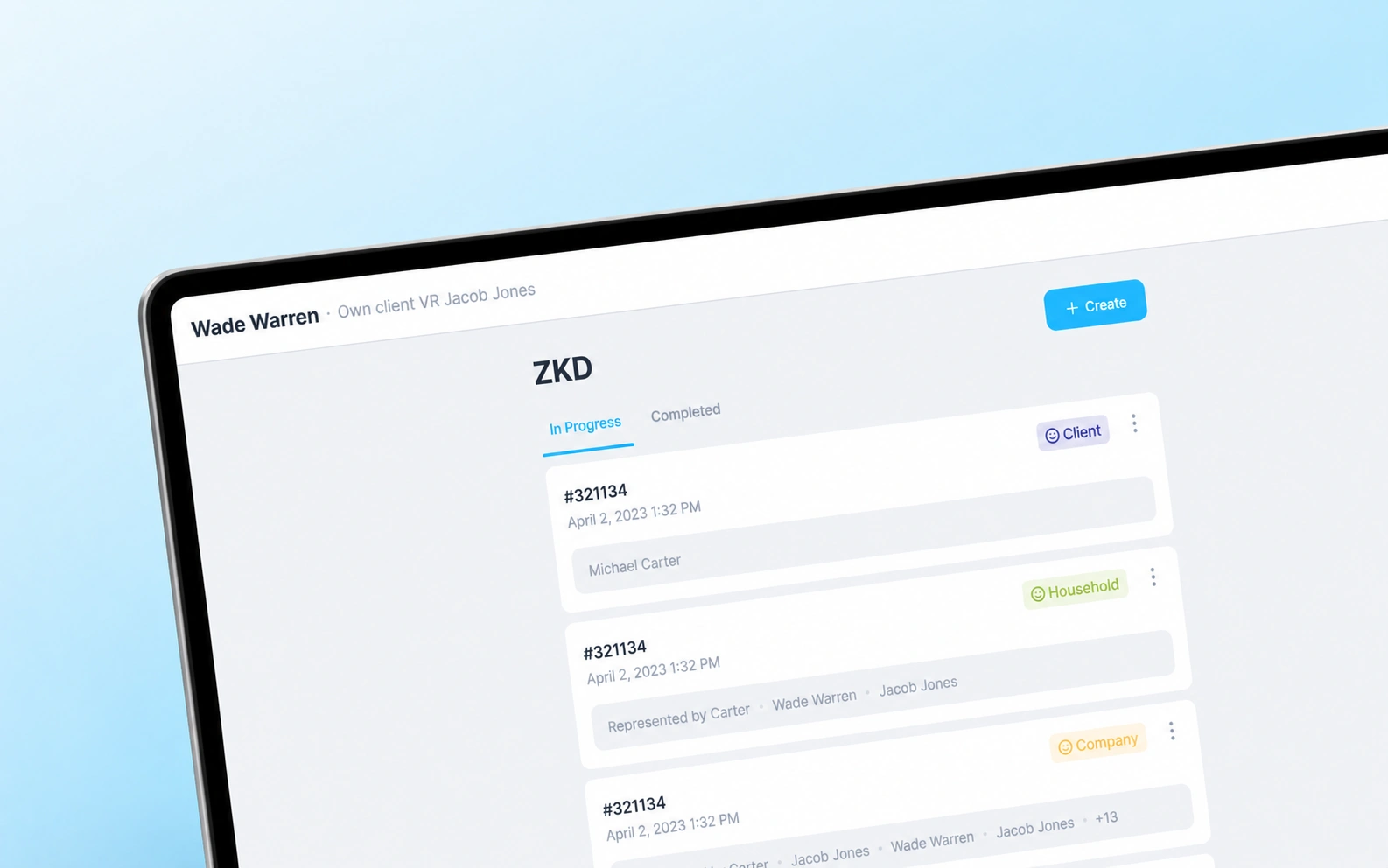
We built ZKD as a custom internal application around that first stage of the relationship. ZKD stands for základný klientsky dokument, or basic client document. It brings the information and checks together in a guided process that produces a document ready for electronic signing.
Supported 5,000+ client documents a month in one process.
OVB now has a connected onboarding process for individuals, households and companies. Advisors reuse available client information and follow the required steps within the application, reducing repeated paperwork and helping protect both the advisor and OVB from missed requirements.
Connected onboarding to the work that follows.
The previous ZKD application was built on legacy systems. It did not collect all the information OVB needed and was disconnected from its newer Aero CRM and Multiprotokol applications. The first client document sat apart from the systems used for the work that followed.
Customer relationships added another layer of complexity. An individual might already exist in OVB’s records, belong to a household, or represent someone else. A company required a different set of information. One fixed form could not account for all of these situations.
Brought client details, checks and signing into one guided process.
OVB supplied the initial design direction and high-level requirements. We designed the database and the logic behind the application, developed the interface, and connected ZKD to the wider OVB ecosystem. The core capabilities are:
- Onboarding for three customer types. Separate paths for individuals, households and companies, with shared records and a consistent experience.
- Client and representative relationships. Support for people acting on behalf of others, including representatives who are not yet existing clients.
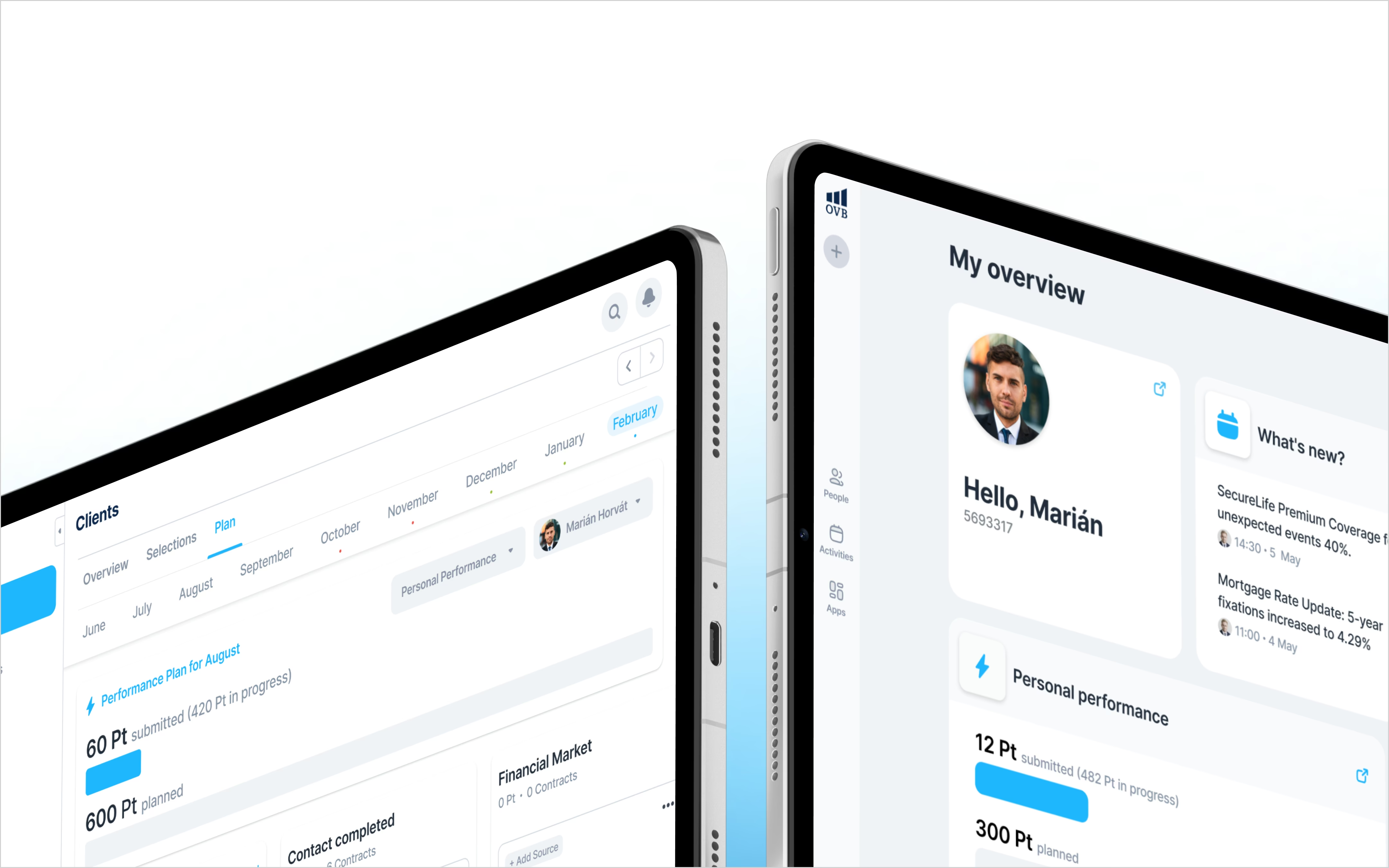
- Connected customer information. Integrations with Aero and Multiprotokol so available information can be reused.
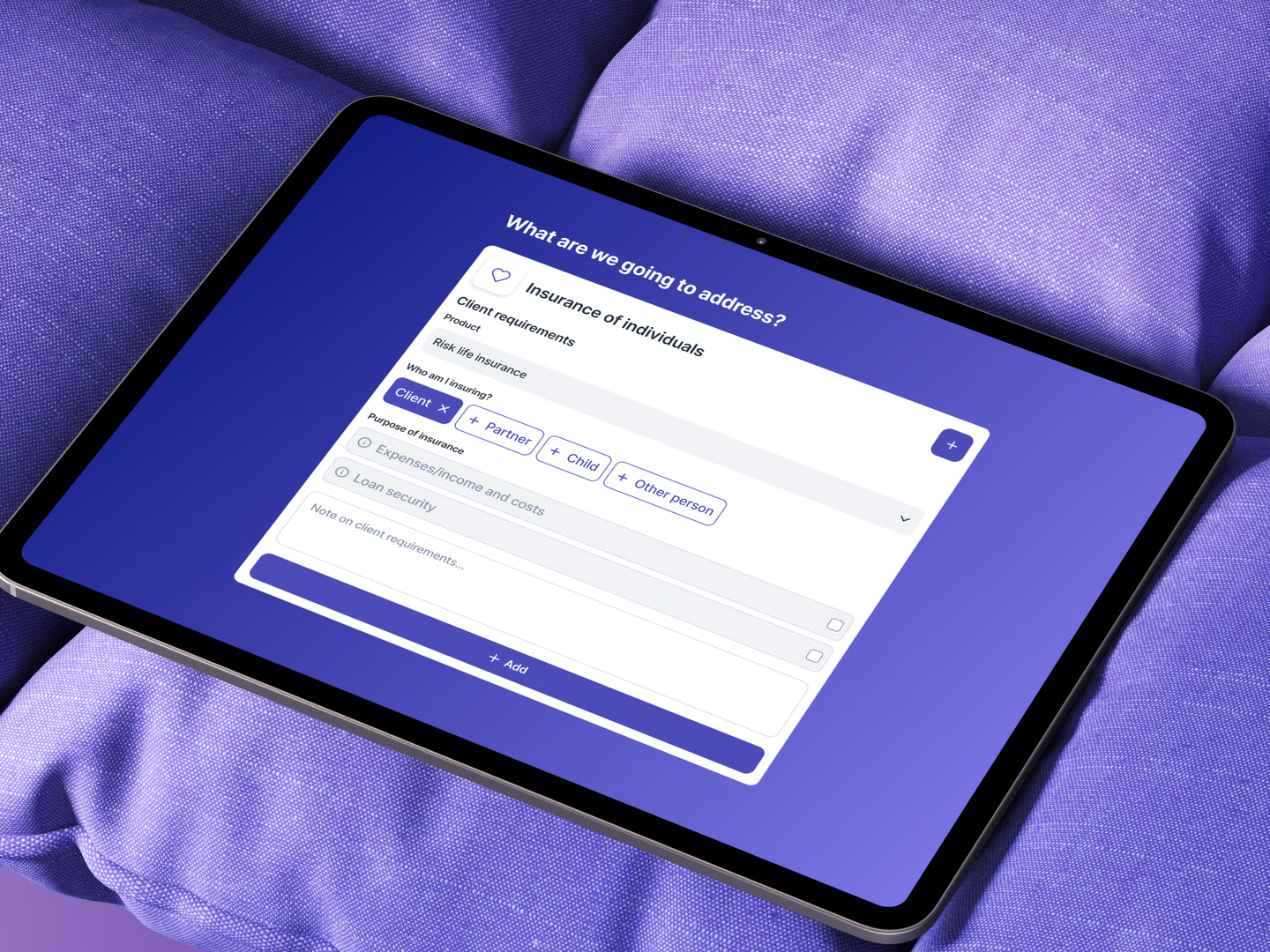
- KYC information and AML checks. Identity details, consents and anti-money laundering requirements incorporated into the onboarding flow.
- Documents ready to sign. The completed information becomes a standardised client document for electronic signing.
- Expiration and GDPR compliance. An unsigned ZKD expires after 30 days, ensuring that personal data from the unsigned document is not retained beyond this period. The document must be renewed every two years. The system requires a new ZKD to be signed before any further client-related actions can be performed.
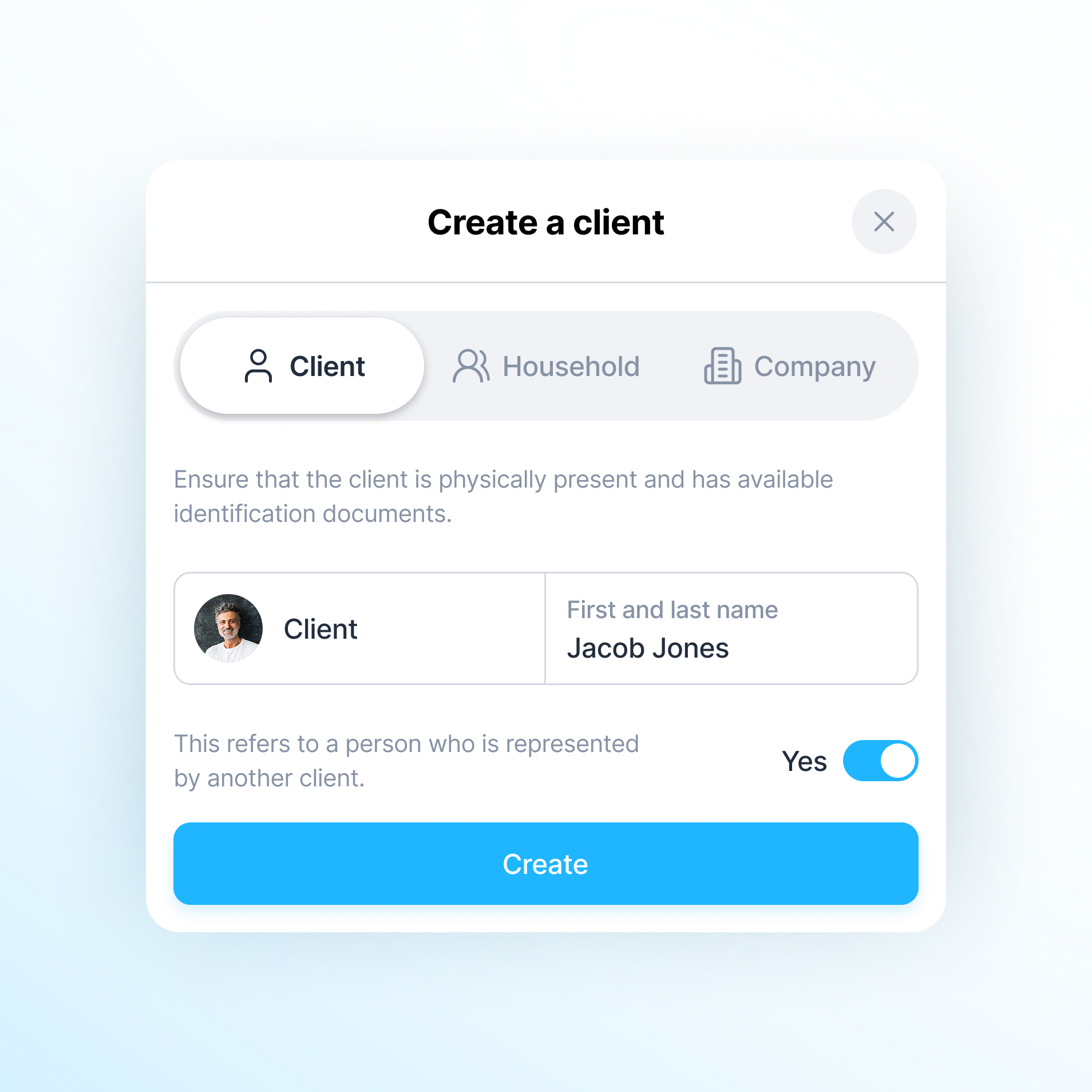
Kept complex client relationships manageable for advisors.
Much of the development work concerned records that already existed. Some clients had no previous ZKD document. Others had an expired one. Representatives and dependants introduced additional relationships that the application had to handle correctly.
We mapped the existing customer data and organised the application around the three onboarding flows. Shared parts could work across all of them, while each flow kept the rules specific to its customer type.
As we implemented those flows, further exceptions emerged and required adjustments to the logic. This is an important part of building client onboarding software for financial services: the screen can stay straightforward only if the application accounts for the less straightforward cases behind it.
Helped advisors complete required checks consistently.
Multiprotokol already included AML functionality. We reviewed what ZKD could reuse and where onboarding required different decisions or additional information. That gave the project an existing foundation while leaving room for the requirements of the first client document.
KYC, or know your customer, concerns the client information collected at this stage. AML checks are part of the same workflow. Bringing both into the required steps helps advisors complete the process consistently, with the collected information feeding the final document.

Kept client information useful beyond the first document.
ZKD gives OVB a more consistent starting point for each client relationship. The completed record connects with the wider system, so the information gathered during onboarding remains useful beyond that first task.
The project’s deeper lesson is about continuity. Onboarding works better when it recognises the records a business already has, handles the exceptions advisors encounter, and produces something the next part of the process can use.
See more screens in the OVB ZKD case study.