Brought OVB’s everyday client work into one workspace.
OVB Allfinanz Slovakia helps clients with insurance, investments, savings and loans. Its advisors manage client relationships, plan meetings and follow up on the work those meetings create.
We built Aero, a custom CRM for financial advisors, to connect more of that daily work. It brings client records, planning, activities and supporting applications into one workspace, giving OVB an alternative to its fragmented collection of legacy tools.
Connected five tools to simplify everyday client work.
In a user survey, respondents reported a 20–30% improvement in work efficiency compared with the previous system. They also rated their satisfaction at 1.7 on a scale where 1 was best and 5 was worst. Aero gave advisors a more connected way to manage client work, with further integrations continuing through the rollout.
Reduced duplicated work across separate systems.
OVB’s older applications used different technologies and data sources. They were difficult to maintain, were not interconnected, and could not support all the new functionality the business needed.
For advisors, that meant duplicated work and more places to check for information. New team members had to learn a complicated collection of systems. Different sales teams also had their own ways of managing client relationships.
The requirement list was extensive. OVB wanted a meaningful improvement from the first release, but the initial timeline could not accommodate everything. Together, we needed to decide which parts of daily work the first version would bring together.
Brought meetings, follow-ups and client records into one workspace.
We began with OVB’s Digital Transformation team, using workshops to clarify the users, requirements and project priorities. OVB supplied the design direction, with our designers providing consultation. Outloud designed the database and application architecture, built the internal software and integrations, and supported its operation.
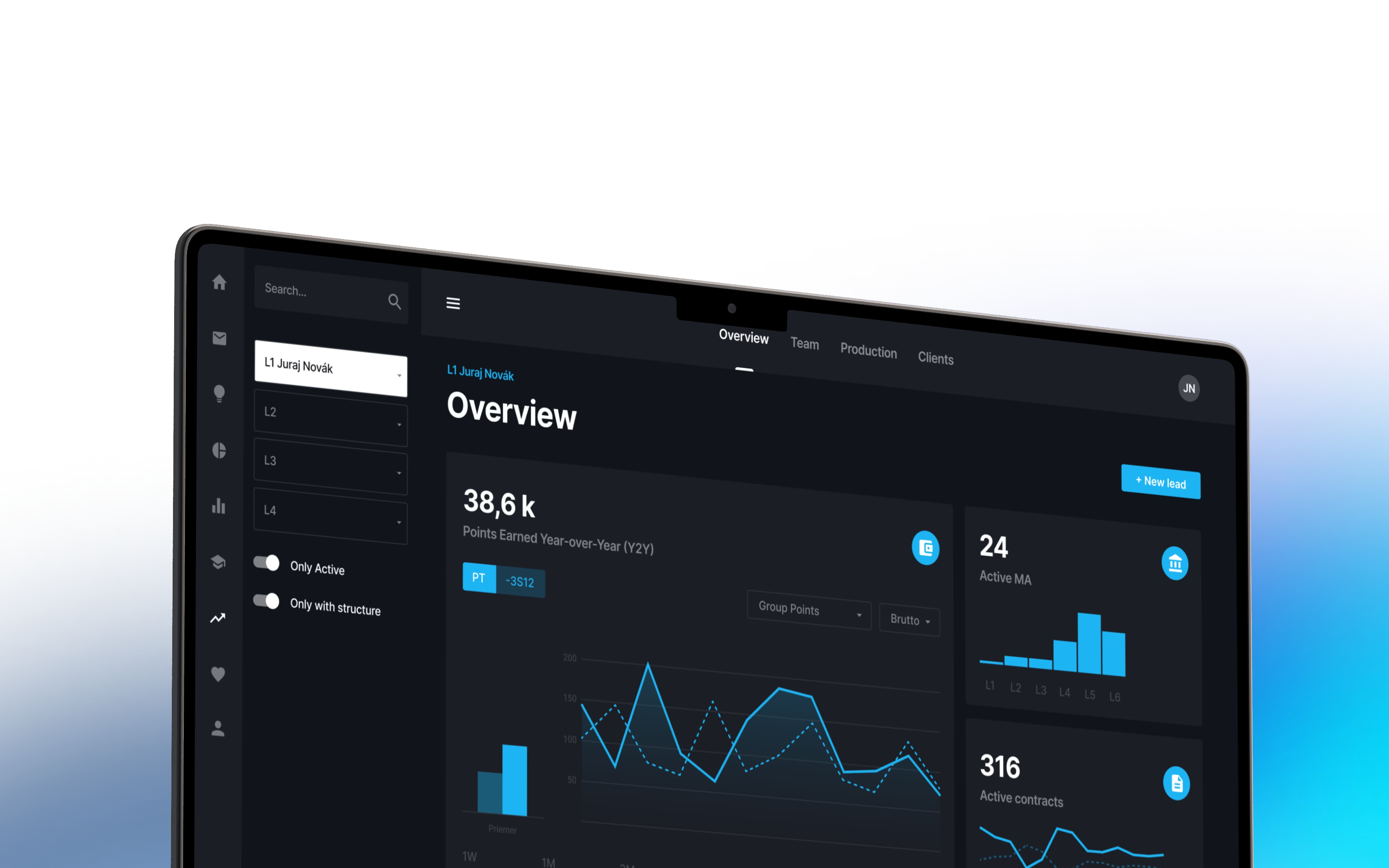
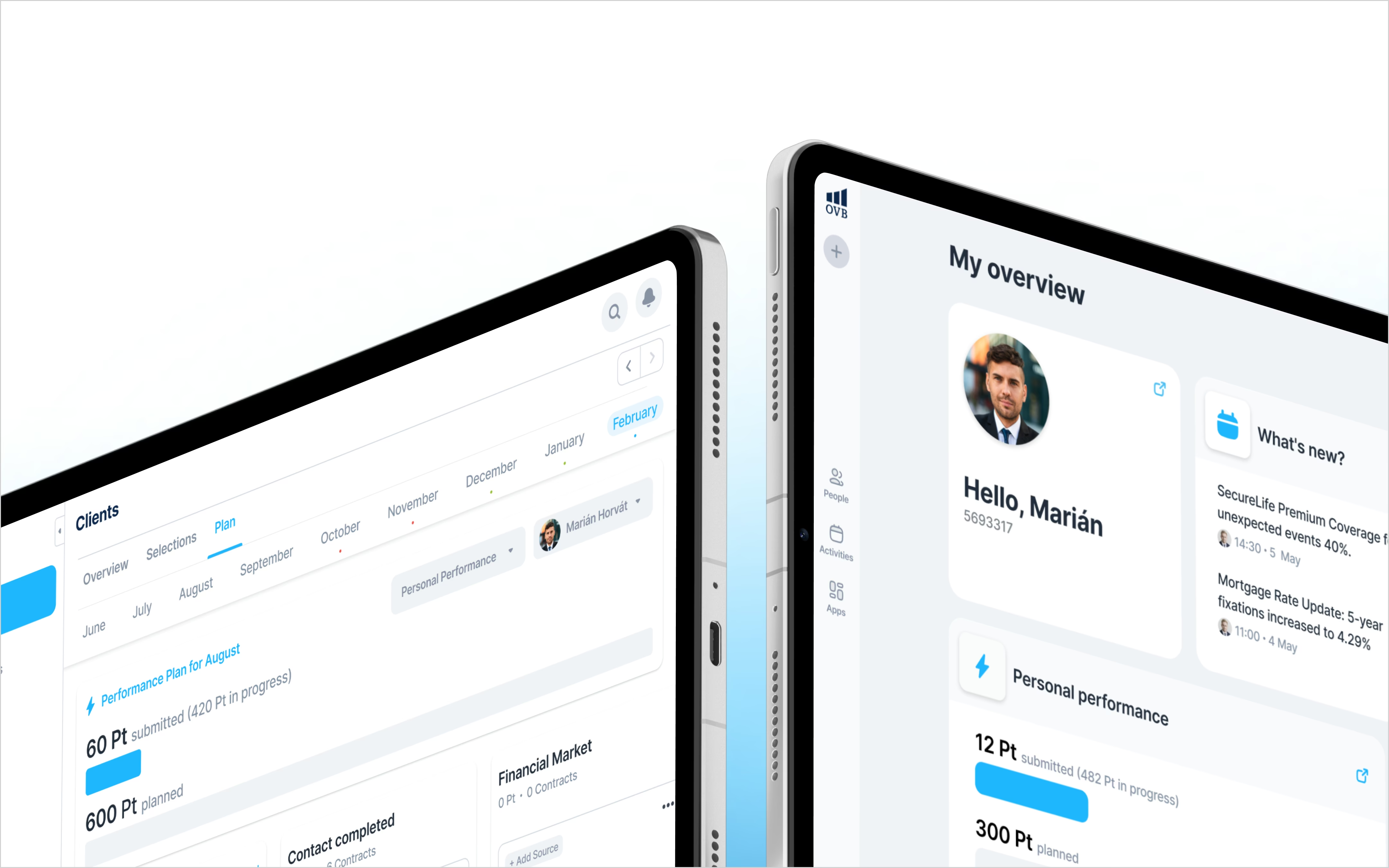
- A daily dashboard. An overview that gives advisors a starting point for their work.
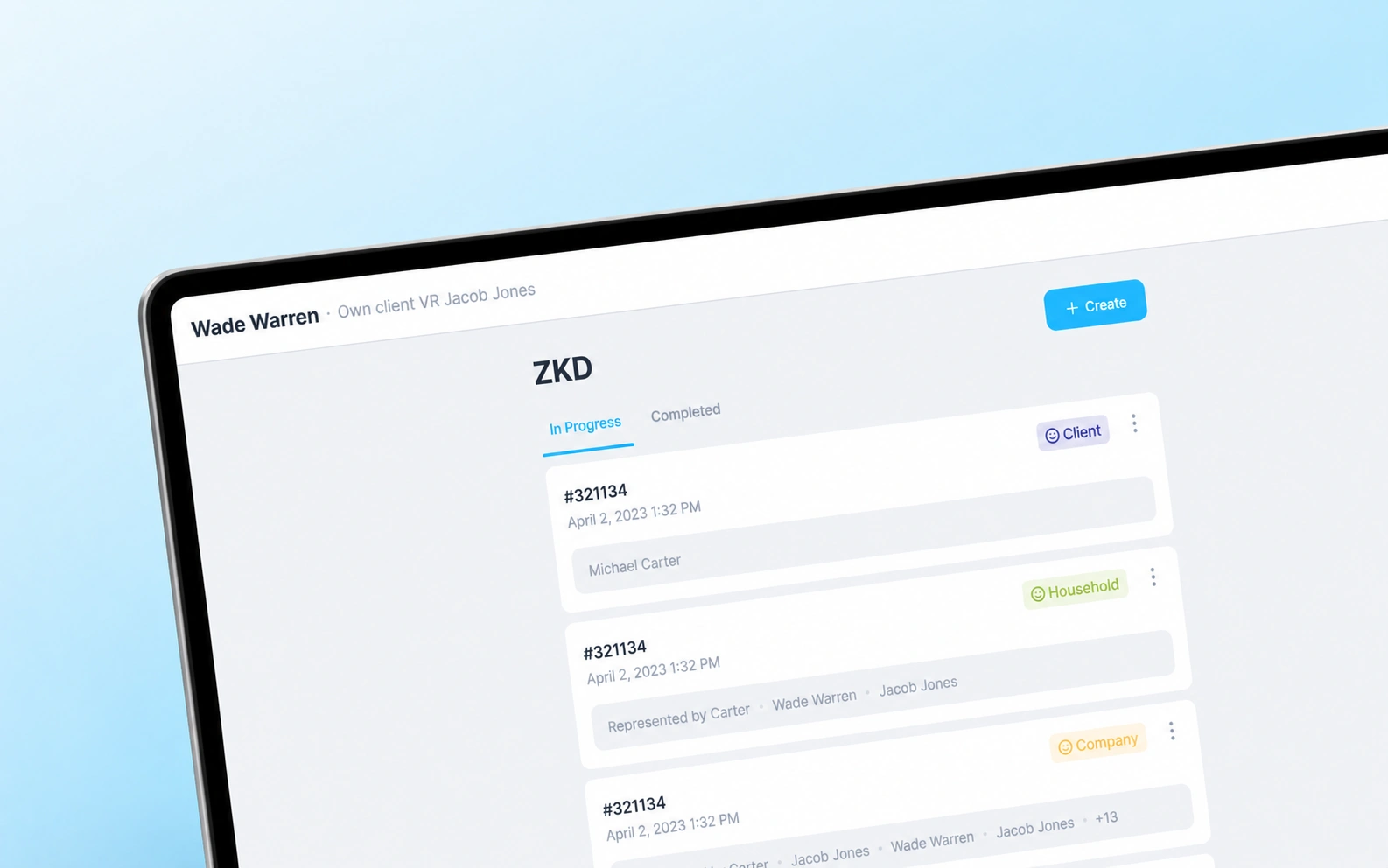
- Client lists and profiles. Connected records with search and filtering to find the relevant client information.
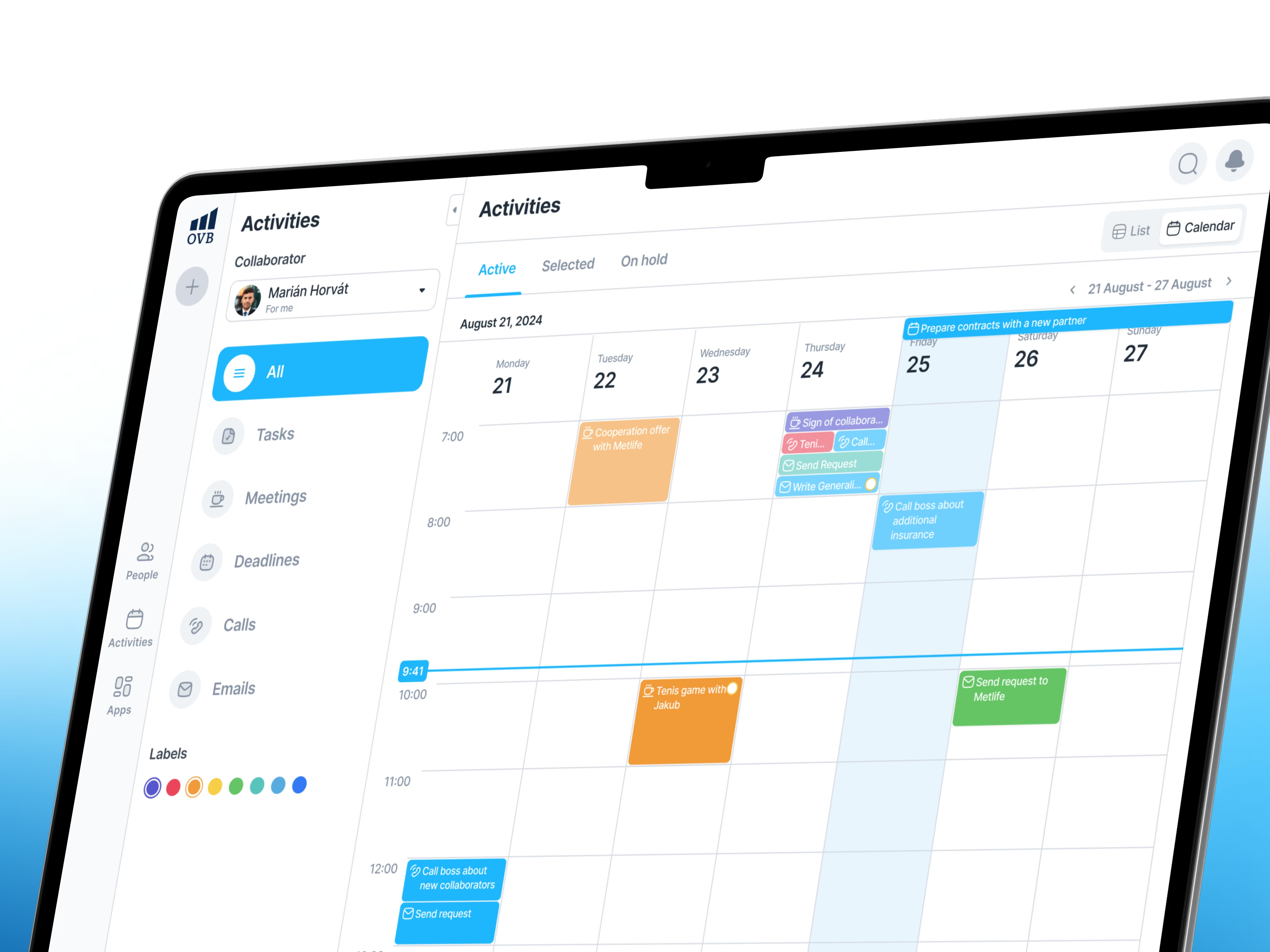
- Planning and activities. Meetings, tasks and follow-up work within the same workspace.
- Notifications and back-office tools. Supporting functions for the people using and maintaining the information.
- Connections to other systems. Integrations with internal applications, available partner data, email services and the mobile application.
Kept client information and its history connected.
One of the harder problems was how the source systems stored information. Some databases were regularly deleted and regenerated, which made changes impossible to track directly. Simply displaying those sources together would not provide the history the new application needed.
We consolidated multiple sources into a local database that could support change tracking. That gave Aero a foundation for maintaining connected client records across its modules.
External partner data brought further constraints. Information arrived through different methods, including APIs and exports, and some important data was unavailable. We built around what could be connected and kept further integrations as an ongoing part of the work. Aero’s potential still depended in part on data outside OVB’s direct control.
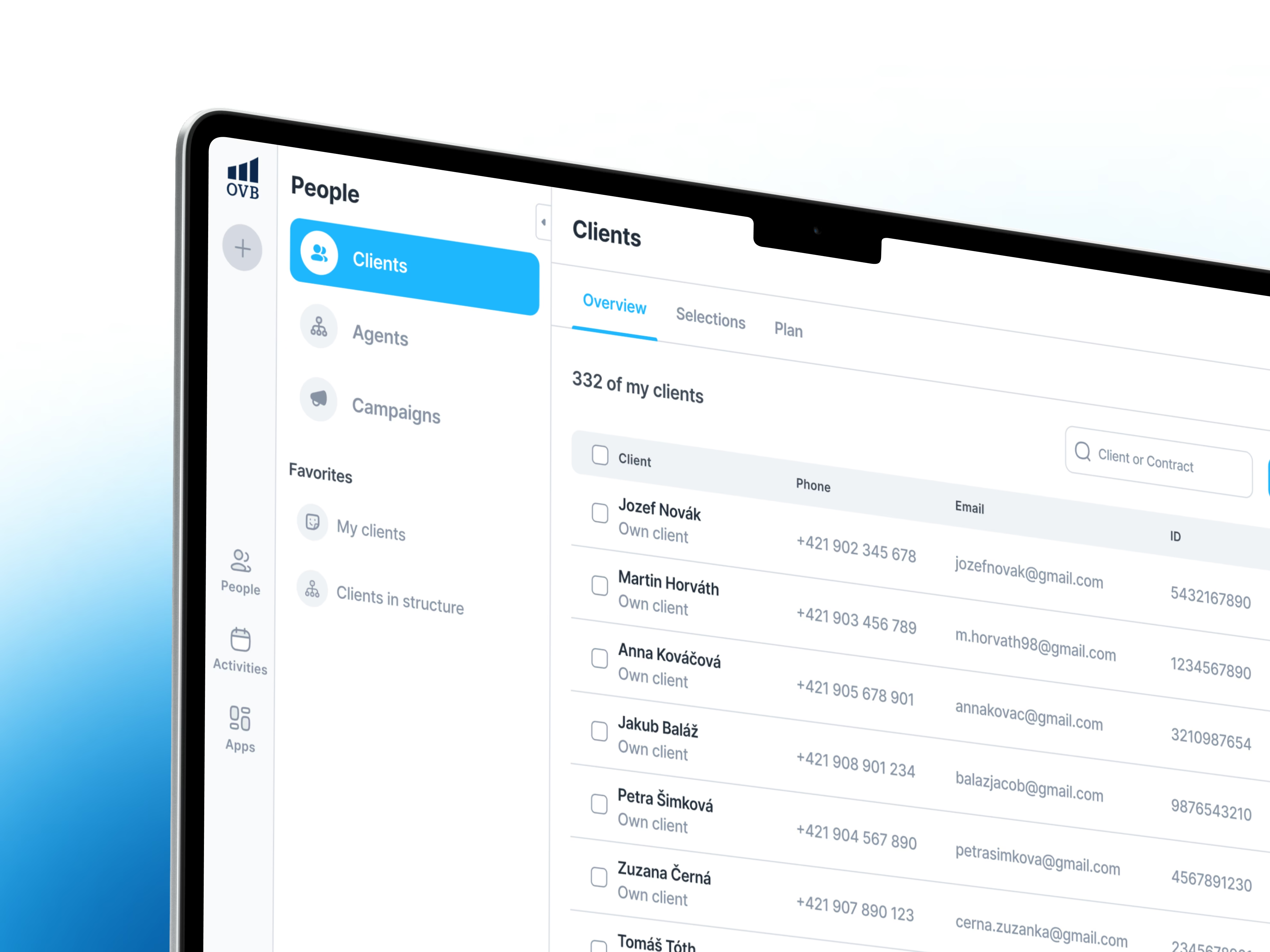
Made large client lists easier to search.
Aero needed to work with hundreds of thousands of records. Complex combinations of filters could create heavy infrastructure load, slowing the application and sometimes causing timeouts.
We refined filtering and data processing as the platform developed. Performance was part of the user experience: bringing information together would offer little benefit if advisors then had to wait too long to find it.
The interface also needed to work for people with different levels of digital confidence, across desktop and mobile. That made everyday usability as important as the number of functions included.
Gave teams a practical reason to switch.
Some sales teams were initially sceptical, and each had requirements it wanted fulfilled before switching. We prioritised the first release and rolled the platform out in stages based on the functionality available.
Feedback from those teams helped shape subsequent work. The result was a platform that could expand around daily use, with performance improvements and new connections continuing alongside adoption.
Aero shows why consolidating tools takes more than combining screens. The records have to work together, the most frequent tasks need a clear home, and people need a practical reason to change their habits.
See more of the workspace in the OVB Aero case study.