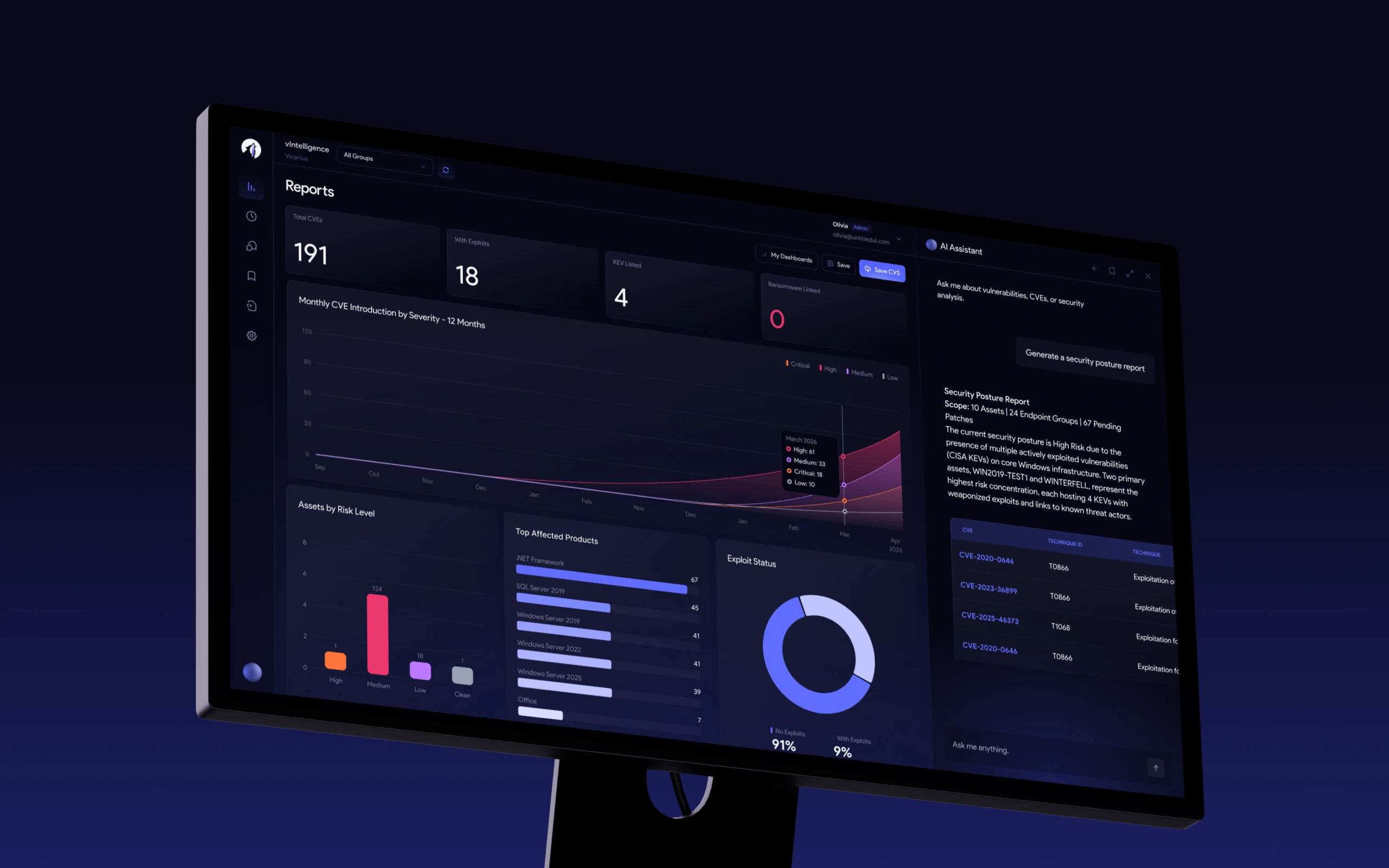
Helped Vicarius turn security data into reviewed action.
Vicarius helps organisations find and address software vulnerabilities. Its vRx product supports applying security fixes. vIntelligence connects the work that leads up to those fixes: understanding the security data, investigating a finding and deciding what action to take.
Outloud designed and developed vIntelligence with Vicarius’ product and engineering teams. We turned an early concept into a working platform that brings security data, analytics, AI-assisted investigation and remediation workflows into one experience.
Gave analysts a clearer path from a finding to a fix.
Analysts can explore reports, ask the AI assistant about the findings, review a proposed action and follow its execution through the vRx integration. The product connects steps that previously sat in separate interfaces, while keeping people involved in deciding what should happen.
The first release established that connected workflow. Subsequent work expanded the data sources and strengthened synchronisation and performance. The outcome is a usable foundation for a broader security product.
Brought reports and AI chat together for investigation.
Vicarius had already tested demand for conversational security analysis through vAnalyzer AI. But analysts worked with a Metabase reporting interface and a separate AI chat application. Both used the same underlying database, yet users had to connect the findings themselves.
We focused on that gap. A useful answer should remain connected to the affected assets, the supporting data and the next action. Bringing these together required product design and application development as well as AI assistant integration.
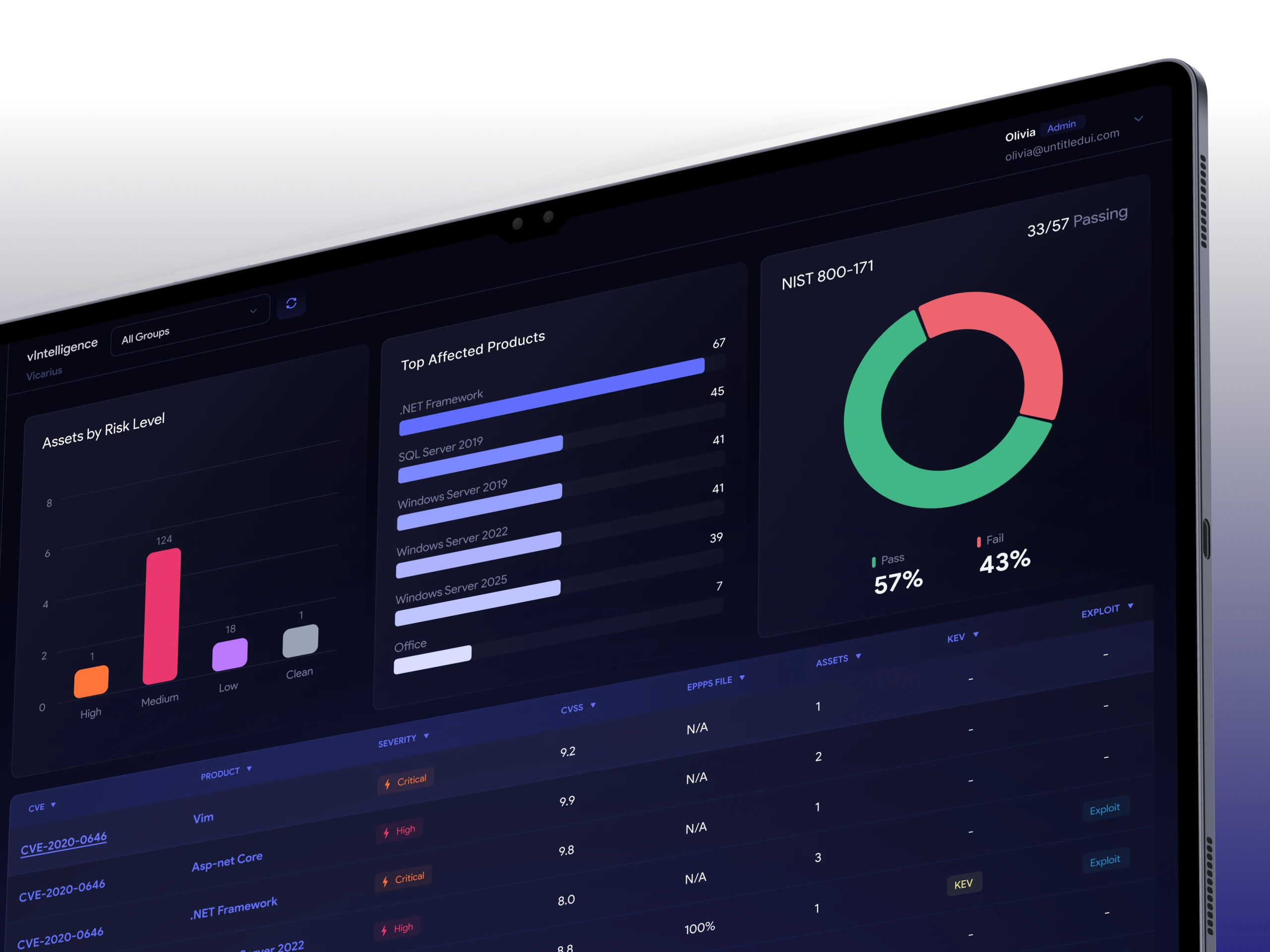
Brought risk analysis and the next action into one place.
- Native reporting and dashboards. Analysts can explore vulnerabilities, assets and remediation information inside the product.
- Contextual AI investigation. The assistant uses security data to help explain findings, assess risk and suggest priorities.
- SQL Workbench. Advanced users have a dedicated place to query and investigate the underlying information.
- Reviewed remediation workflows. Proposed actions connect to vRx, where fixes can be carried out after review.
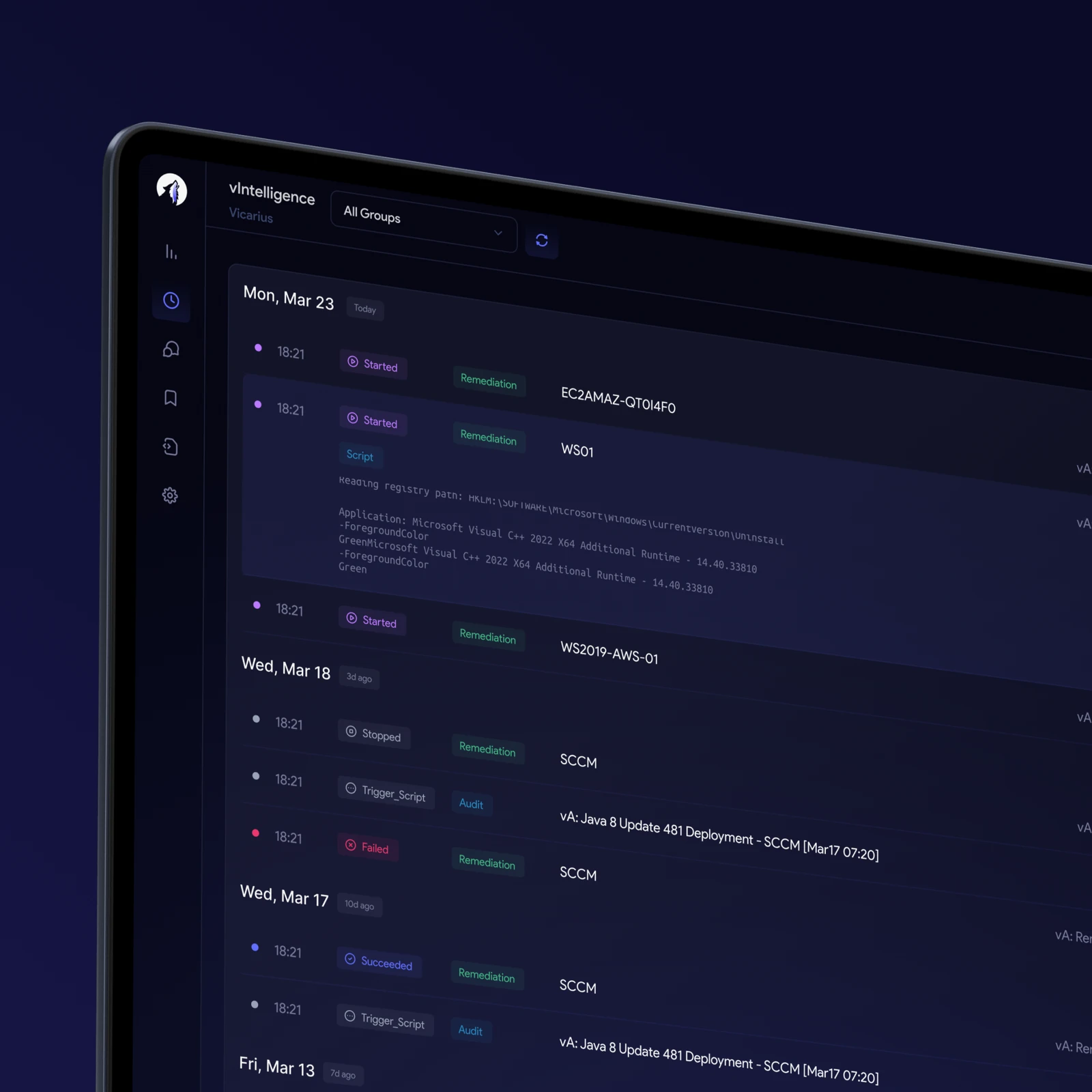
- Activity and execution tracking. Users can see what is running, completed or in need of attention.
- Connections to additional security tools. The next phase introduces a shared approach to connecting providers and synchronising their data.
Kept analysts in control of AI-recommended fixes.
The assistant supports investigation, but an explanation alone does not complete the analyst’s job. We connected recommendations to a review-and-execute flow and made execution progress visible. People can evaluate a proposed response before moving ahead, then check what happened.
These review and approval workflows are part of the product’s value. The interface needs to distinguish a recommendation from an action in progress, and a completed task from one that failed. Those states give analysts a clearer basis for the next decision.
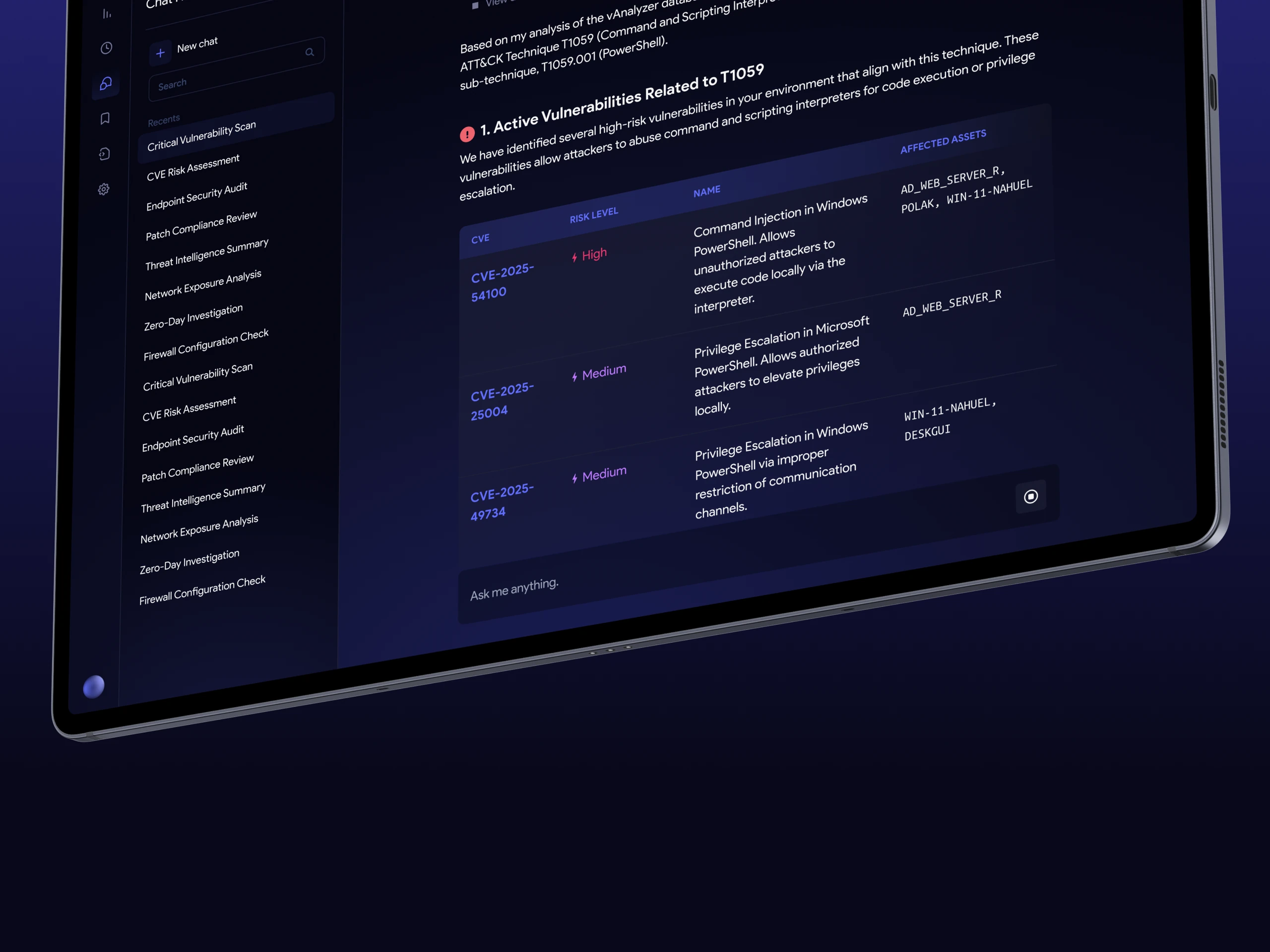
Gave security specialists a product shaped around real investigations.
The starting prototype showed the intended direction, but it did not answer every question about how the platform should behave. We worked through real scenarios with Vicarius’ specialists and documented decisions as the product took shape.
We began with the core reports, assistant, activity log, SQL Workbench and settings. Shared components and interaction patterns became a design system that supported consistent implementation as new functionality arrived. The application uses Vue and Nuxt for the interface, Node.js and PostgreSQL behind it, and Google’s AI tooling for the assistant.
Delivery followed three milestones: reporting and platform foundations; the wider operational interface and initial assistant; then the connection from investigation to remediation. More frequent feedback during development helped resolve differing assumptions earlier, instead of collecting a large set of changes at the end.
Built a fuller risk picture from multiple security tools.
The work continued beyond the initial release. The next phase established provider connections and integrations with Qualys and CrowdStrike, alongside changes that allow vulnerability evidence from multiple sources to be represented together.
That required more than adding integration buttons. Synchronisation needed to recover from interruptions, process changes incrementally and show progress. Database and query improvements supported the larger volumes of information coming into the platform.
These system integrations move vIntelligence towards a broader security intelligence layer. They extend the original release with more of the information analysts need to make decisions.
For Vicarius, Outloud’s contribution was connecting domain expertise to a product analysts could use, from the reporting experience through investigation and reviewed action. See the vIntelligence visual case study for more of the interface.